
Future of Work
The Future of Jobs in the Age of Artificial Intelligence: What Skills Will Matter in Africa
DataRay
2026-03-11 • 7 min read
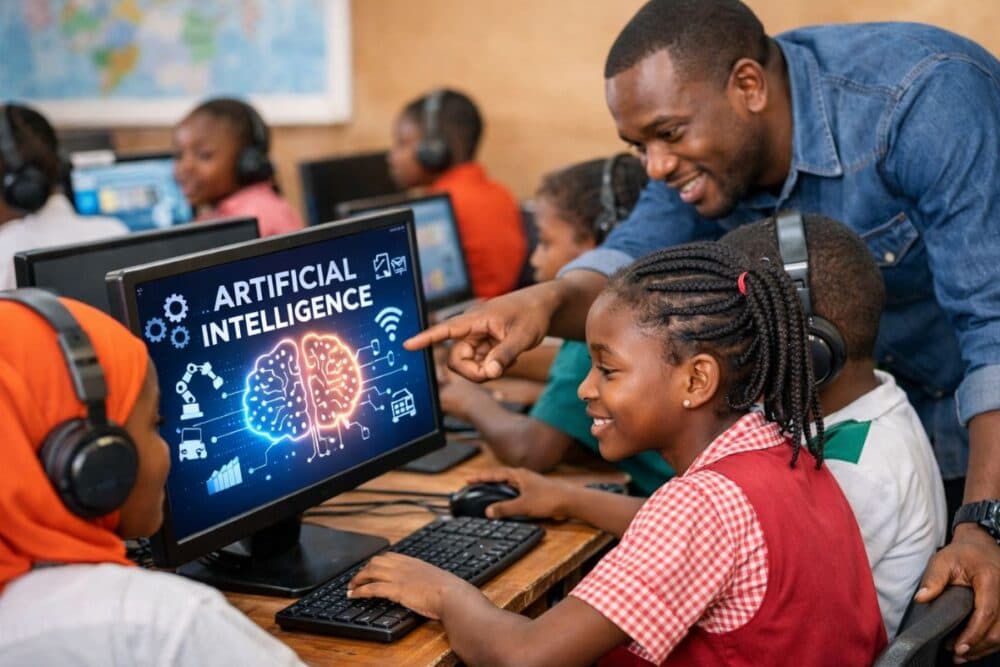
Artificial intelligence is rapidly reshaping the global economy. From automated customer service systems to predictive healthcare analytics and intelligent financial platforms, AI technologies are redefining how work is performed across industries. While many discussions about AI focus on advanced economies, the transformation will be equally significant across Africa.
Africa is entering a critical period where population growth, digital infrastructure expansion, and technological innovation intersect. According to the United Nations, Africa will have the largest workforce in the world by 2050. At the same time, automation and artificial intelligence are altering the types of skills that employers demand. This raises an important question: what kinds of jobs will thrive in the age of AI, and how should African education systems and professionals prepare? Understanding these shifts is essential for students, professionals, universities, and policymakers who aim to ensure that Africa’s workforce remains competitive in the global economy.
Historically, technological revolutions have transformed labor markets rather than eliminating work altogether. The industrial revolution replaced manual production with mechanized factories, and the digital revolution automated many clerical and administrative tasks. Artificial intelligence represents the next stage of this progression. Unlike earlier technologies, AI systems can perform tasks that require pattern recognition, data analysis, and even elements of decision-making. Machine learning algorithms can detect fraud in banking systems, assist doctors in diagnosing diseases, optimize supply chains, and generate business forecasts.
However, AI is particularly effective at tasks that are repetitive, predictable, and data-driven. As a result, occupations that rely heavily on routine processes are most vulnerable to automation. At the same time, roles that require creativity, complex problem solving, and human interaction are likely to grow in importance. For Africa, the challenge is not simply about protecting jobs but about preparing the workforce to participate in emerging technology-driven sectors.
While artificial intelligence will create many new opportunities, certain categories of work may decline over the next decade. Jobs that involve repetitive tasks and standardized procedures are particularly susceptible to automation. Administrative and clerical roles are among the most vulnerable. Data entry, basic accounting, document processing, and scheduling tasks can increasingly be handled by automated systems. Many organizations already use AI-powered software to process invoices, manage calendars, and generate reports.
Customer service roles are also evolving rapidly. Chatbots and virtual assistants can handle a large portion of routine inquiries, especially in telecommunications, banking, and e-commerce industries. Although human support will still be necessary for complex cases, the total number of frontline customer support staff may decrease. Manufacturing and basic operational jobs may also face pressure as robotics and intelligent production systems expand. While Africa’s industrial automation levels remain lower than those in developed economies, global supply chains are gradually introducing more advanced technologies. Importantly, these changes do not necessarily eliminate employment but often transform job responsibilities. Workers who once performed routine tasks may need to shift toward supervision, system management, or analytical roles.
At the same time that some roles decline, many new categories of work are emerging. The rise of AI creates demand for professionals who can design, implement, interpret, and manage intelligent systems. Data science and analytics are among the fastest-growing fields globally. Organizations increasingly rely on data to guide decision-making, making professionals who can analyze and interpret data highly valuable. Data analysts, machine learning engineers, and AI researchers are expected to remain in high demand for years to come.
Healthcare technology is another rapidly expanding sector. AI-driven diagnostic tools, disease prediction systems, and digital health platforms require specialists who understand both healthcare systems and data analytics. In Africa, where healthcare infrastructure faces significant challenges, technology-based solutions could dramatically improve service delivery.
Cybersecurity is also becoming increasingly important. As digital systems expand across finance, government, and business sectors, protecting sensitive data and digital infrastructure becomes critical. Security analysts and cyber defense specialists are already among the most sought-after technology professionals.
In addition, roles that combine technology with human-centered skills are likely to expand. Product designers, digital strategists, and technology consultants who understand both technological capabilities and human needs will play essential roles in the AI-driven economy.
As artificial intelligence becomes embedded in everyday systems, a basic understanding of data and AI will become increasingly valuable across many professions. This does not mean that everyone must become a machine learning engineer. However, professionals in fields ranging from business and healthcare to agriculture and education will benefit from understanding how data-driven technologies work. Data literacy enables individuals to interpret information, identify trends, and make informed decisions.
For example, a hospital administrator who understands healthcare analytics can better evaluate patient outcomes and allocate resources effectively. Similarly, a business manager with knowledge of predictive analytics can identify market trends and improve strategic planning.
AI literacy also helps individuals understand the limitations and ethical implications of automated systems. As algorithmic decision-making becomes more common, professionals must be able to evaluate whether these systems are accurate, fair, and appropriate for the context in which they are used. In this sense, data science and AI literacy are becoming foundational competencies, similar to computer literacy in the early digital era.
Education systems across Africa face the challenge of preparing students for a rapidly changing technological landscape. Traditional curricula in many institutions still emphasize memorization and theoretical knowledge rather than analytical thinking and problem-solving skills.
To prepare students for the future workforce, universities and training institutions must integrate digital and analytical skills into a wide range of disciplines. Data analysis, programming fundamentals, and computational thinking should not be limited to computer science programs but introduced across fields such as economics, health sciences, and engineering.
Interdisciplinary education is also becoming increasingly important. Many of the most impactful technological innovations occur at the intersection of multiple fields. For example, combining data science with healthcare expertise can lead to advanced disease prediction systems and more efficient hospital management.
Practical training is another critical component. Students benefit greatly from project-based learning, internships, and collaborations with industry. These experiences allow them to apply theoretical knowledge to real-world challenges and develop the problem-solving skills that employers increasingly value.
Governments and educational institutions also play a role in expanding access to digital infrastructure, research opportunities, and innovation ecosystems that support technology development across the continent.
Looking ahead, several categories of skills are likely to define success in the AI-driven workforce. Technical skills will remain important, particularly in fields such as data science, software development, cybersecurity, and artificial intelligence engineering. These professions will continue to drive technological innovation and support digital infrastructure.
However, non-technical skills are equally important. Critical thinking, adaptability, and creativity enable individuals to navigate complex and rapidly evolving environments. As routine tasks become automated, uniquely human capabilities such as strategic thinking and collaboration become more valuable.
Communication skills will also become increasingly significant. Professionals must be able to explain complex data insights, technological systems, and strategic decisions to diverse audiences, including policymakers, executives, and the general public.
Finally, lifelong learning will become essential. The pace of technological change means that many professionals will need to update their skills continuously throughout their careers. Online learning platforms, professional training programs, and industry certifications are becoming vital components of modern career development.
Artificial intelligence is transforming the global labor market, creating both challenges and opportunities for Africa. While certain routine jobs may decline as automation expands, new opportunities are emerging in technology, healthcare innovation, data analytics, and digital infrastructure. The key to navigating this transformation lies in preparation. Students, professionals, universities, and policymakers must work together to develop a workforce that combines technical expertise with critical thinking, adaptability, and creativity.
Africa’s rapidly growing population represents one of its greatest strengths. If supported by strong educational systems, digital infrastructure, and forward-looking policies, the continent’s workforce can play a significant role in shaping the global AI-driven economy. The future of work in Africa will not simply be defined by technology itself but by how effectively people learn to harness its potential.